In the first scenes of the German sci-fi thriller Dark on Netflix, viewers are plunged directly into a maze of puzzles. The multi-timeline, incredibly woven plot of the show is not simply a daring creative decision. It is the direct result of the particular technological affordances and viewing practices produced by internet-distributed television.
To explain this structural change, we need to take a wider scope outside the traditional broadcast. According to Amanda Lotz (2017), this is a new era characterized by the concept of portals. In contrast to linear channels which are dependent on the mass appeal of making certain choice slots available in prime time to draw advertisers, a portal such as Netflix is dependent on subscriber retention and algorithmic positioning. With this portal environment, a niche, subtitled and massively complicated show such as Dark can find a devoted audience around the world without having to attract a standard mainstream audience. The portal arrangement basically splits the mass audience into very engaged segments.
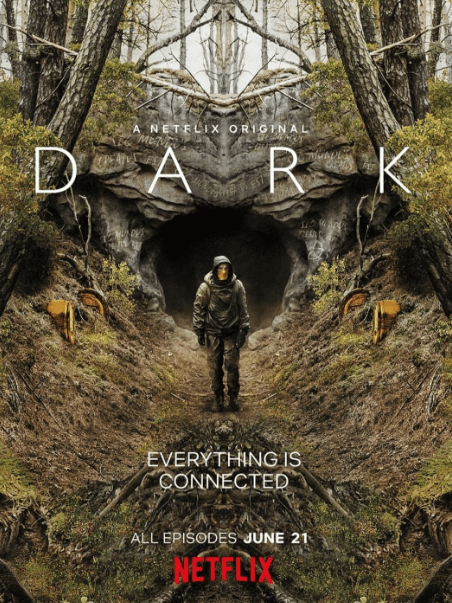
Moreover, our consumption of this material has been transformed dramatically. Mareike Jenner (2016) describes the era as TVIV, a time when the ability to control what viewers watch has never been as high as it is now, and the trend of binge-watching is also promoted by the platform. The consumption of the show is predetermined by the Netflix interface itself. This can be accomplished with features such as the skip intro button and automatic episode progression making watching television a continuous stream instead of a scheduled event.
This change towards TVIV restructures narrative at a new level. Since the creators assume that the viewers become binge-watchers, they do not have to create weekly recaps or normal episodic cliffhangers that will make viewers come back seven days later. In an event that Dark was aired on a weekly basis, the viewers would most probably lose focus of the four related families across numerous generations. The form of narrative it takes requires and assumes a binge-viewing model, in which the temporal puzzle is only assembled using the immediate memory of the viewer.
In conclusion, Dark is a good illustration of how medium determines message in the streaming age. The Netflix portal architecture and the mechanics of TVIV do not simply alter the manner in which we watch television; they fundamentally alter the type of television that can be produced.
References
Jenner, M. (2016). Is this TVIV? On Netflix, TVIV and binge-watching. New Media & Society, 18(2), 257-273.
Lotz, A. D. (2017). Portals: A treatise on internet-distributed television. University of Michigan Library.
Odar, B. b., & Friese, J. (Creators). (2017-2020). Dark [TV series] Dark (TV Series 2017–2020) – IMDb. Netflix.
 Site Title
留下评论