33887388 Junpu Cao Filmmaking
In the award winning film ‘Sinners’ by Ryan Coogler, we are presented with an interesting cinematic paradox. The film wasset and shot in the Jim Crow South of the 1930s, so it is rather inclined to analog period aesthetics and historical accounts. However, since it was shot in 2025, it is supported by the use of state-of-the-art digital cinematography to enable Michael B. Jordan to effortlessly portray twin brothers. This contrast renders the movie an ideal example of studying the shift of traditional analog film to digital cinema.

The movie used halo rigs, motion control and machine learning to accomplish this dual effect as a recent breakdown of the cinematography of the film explains. This undermines conventional conceptions of photographic truth. With the introduction of the paradigm proposed by Rodowick in mind, we can be complaining about the ontological loss of the indexical realism when the placed cinematic image would no longer assure us of a physical reference point. However, when looking at it from the perspective of Lev Manovich, as seen in his seminal book “What is Digital Cinema?” we can easily observe the benefits of digital simulation. The movie applies sophisticated composite technology to build a smooth hyper-realism. This technology enables a fully convincing dual performance and stretches limits of what can visually be displayed on screen.
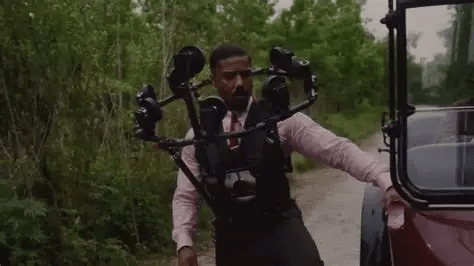
Moreover, this technological change is not a mere superficial visual effect. It shows what Shane Denson and Julia Leyda refer to as the wider post-cinematic condition. They claim that post-cinema would demand that we consider new media in the perspective of continuing historical shift, with emergent media regimes in discourse with each other, and in active processes of re-shaping our inherited cultural forms (Denson and Leyda, 2016). Sinners does exactly this. It inherits such forms as the period drama of history and the vampire myth-allusion, and remedies them with the affordances of the current digital technologies.
Finally, the digital twin effect in Sinners explains how modern cinema creates a world of its own. It takes us beyond the requirement of a strict indexical connection with the physical world and lures us into a mediated, after-cinematic space in which history and simulated digitality mix in a seamless manner.
References
Coogler, R. (Director). (2025). Sinners [Film]. Warner Bros. Pictures.
Denson, S., & Leyda, J. (2016). Perspectives on post-cinema: An introduction. In S. Denson & J. Leyda (Eds.), Post-cinema: Theorizing 21st-century film (p. 2). REFRAME Books.
Filmibee. (n.d.). ‘Sinners’ cinematographer breaks down the unique way she filmed the movie [Exclusive]. Filmibee.com. ‘Sinners’ Cinematographer Breaks Down The Unique Way She Filmed The Movie [Exclusive] – Filmibee.com
Manovich, L. (2016). What is digital cinema? In S. Denson & J. Leyda (Eds.), Post-cinema: Theorizing 21st-century film. REFRAME Books.
Rodowick, D. N. (2007). The virtual life of film. Harvard University Press.
 Site Title
留下评论